The end of the year is marked with different celebrations. From Christmas celebrations to end of the year parties, one thing is certain, it is a time to enjoy homemade food with family, friends or even colleagues from work. In Nigeria during celebrations like this, you can always bet on eating as much chicken as you possibly can. When examining the data provided by the National Bureau of Statistics concerning our consumption patterns in 2019, we consumed less homemade food. Approximately 20 percent of our total food expenditure was allocated to meals consumed outside the home.
With the current price of food items now, dedicating more time to cooking at home or opting for nearby restaurants does not shield individuals from the escalating trend in food prices. Over the past year, food prices have witnessed a significant doubling, and as of November, food inflation stands at 31.52 percent, marking the highest rate since 1996.
Christmas was expensive
Mr. Kunle, an estate manager who is a family man with a wife and son, celebrated his third Christmas with his new family. During our discussion, he emphasized the importance of reevaluating the choice between purchasing a live chicken or opting for the more economical alternative of frozen chicken.
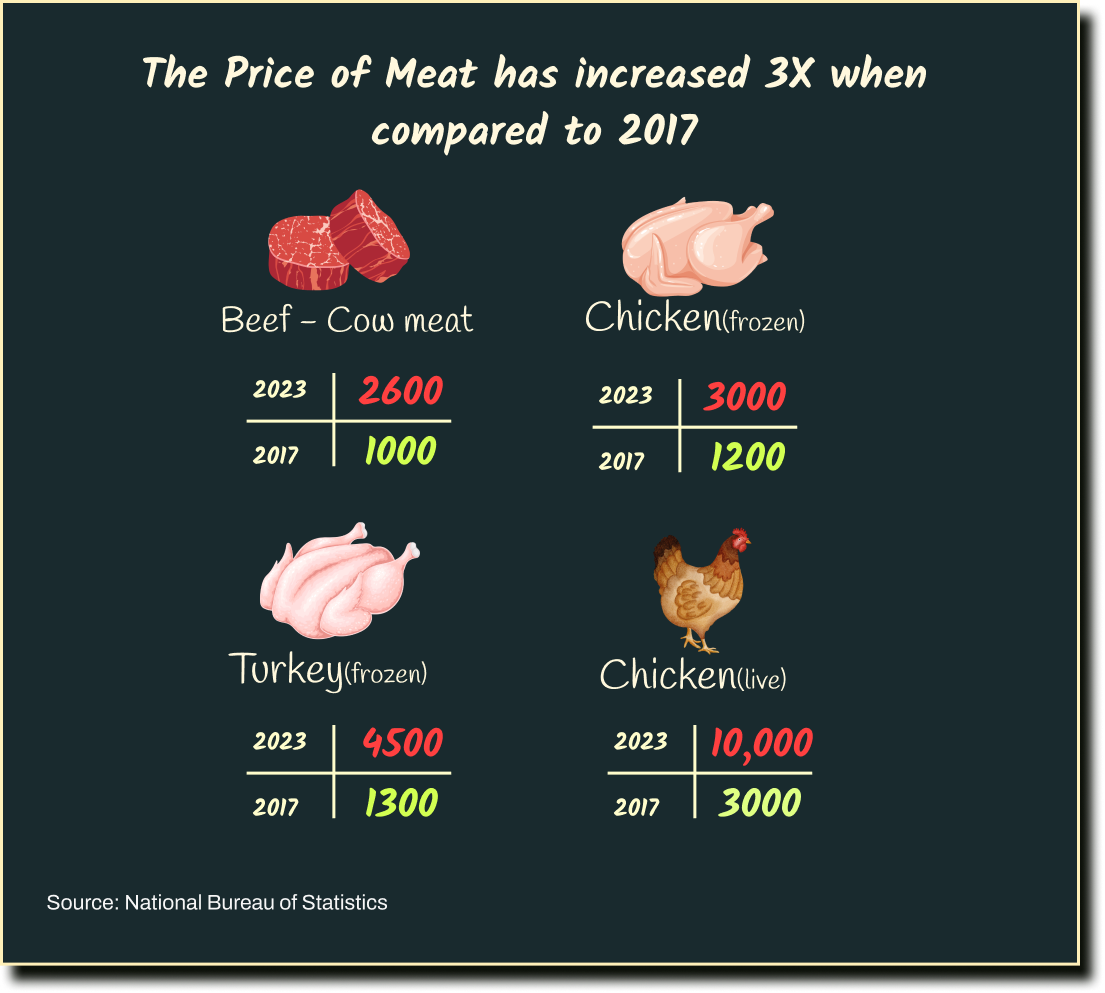
He pointed out that the decision largely hinges on the cost of each item. In a comparative analysis with the previous year, the cost of frozen chicken has witnessed a substantial increase. While a kilogram of frozen chicken was priced at ₦1500 in the past, it is currently being retailed for ₦3000. Furthermore, a three- to four-month-old chicken is now commanding a price range of ₦7500 to ₦10,000. Common practice now is to see households rear their chickens close to any major festive period.
With everyone trying to be economical and cut costs, the reality of things pushing individuals to cultivate what to eat, and as previously advised by our former President Buhari for all to engage in farming, we all definitely can't be farmers.
Cost of farming has increased
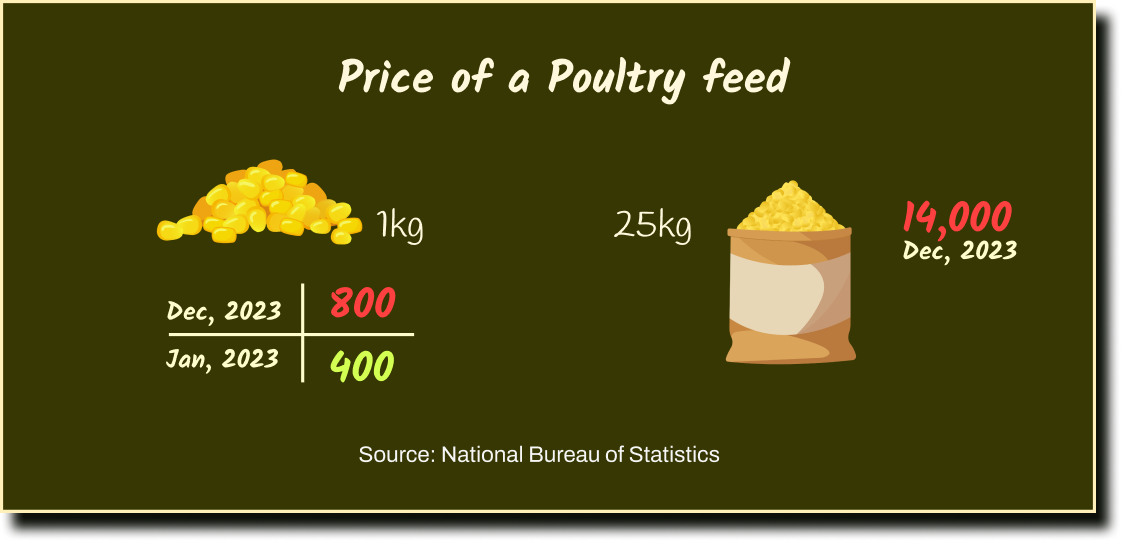
Let’s dive a bit into poultry farming. The primary driver of the increase in the price of poultry meat is the escalating cost of raising these birds. In January, a kilogram of poultry feed was retailed at ₦400, but it is currently being sold for ₦800, with a 25-kilogram bag commanding a price of ₦14,000. Conducting a cost analysis reveals that the 25-kilogram bag can sustain less than three birds until full maturity.
Majority of the components used in feed production can be sourced locally. Maize, soybean, wheat, rice bran, and limestone are all cultivated across the country. Nigeria is the second-largest producer of maize in Africa and the 14th-largest globally. While maize is extensively grown across the nation, the primary production centers are in Borno, Niger, Plateau, Katsina, Gombe, Bauchi, Kogi, Kaduna, Oyo, and Taraba states. These top ten maize-producing states account for nearly two-thirds (64%) of the total maize production in Nigeria. Despite the substantial local production, the demand for maize still surpasses the supply, resulting in an annual demand gap of approximately 4 million metric tons.
If major materials can be sourced within the country, what might be the cause of the current challenges? Mr. Tobi, the owner of Topfeeds, a feed manufacturer in Osogbo, shed light on a significant contributing factor – the price of diesel.
When probed further about the source of his supplies, despite being located in Osogbo, he clarified that he obtains all his supplies within the state and has consistently maintained an uninterrupted flow. However, on certain occasions, he has resorted to ordering maize from Kano.
Diesel a major reason why food is expensive
Tobi emphasized how the surge in diesel prices directly impacts the cost of poultry feed. Diesel is primarily used to fuel the majority of trucks and buses involved in transporting goods from the North. Additionally, the machines used in the production of these feeds are powered by diesel.
Nigeria is confronted with a multifaceted energy challenge. Electricity, which should be the primary power source, is notably absent. We won’t dwell more on this issue but shift our focus to the alternative, which is crude oil products.
As a major producer of crude oil, our economic realities differ from the anticipated benefits of being the third-largest oil-producing third-largest oil-producing country in Africa. Despite exporting crude oil, we find ourselves importing refined products, a situation expected to be addressed by the Dangote Refinery and the recently renovated Port Harcourt Refinery.
Most recently, OPEC has cut Nigeria's oil production quota for 2024 by 20 percent, reducing it from 1.8 million barrels per day to 1.38 million barrels per day
The federal government has been unable to capitalize on the recent surge in petrol prices over the past year due to the expenses associated with subsidizing petrol. The oil price in June 2022 reached its highest level since 2014
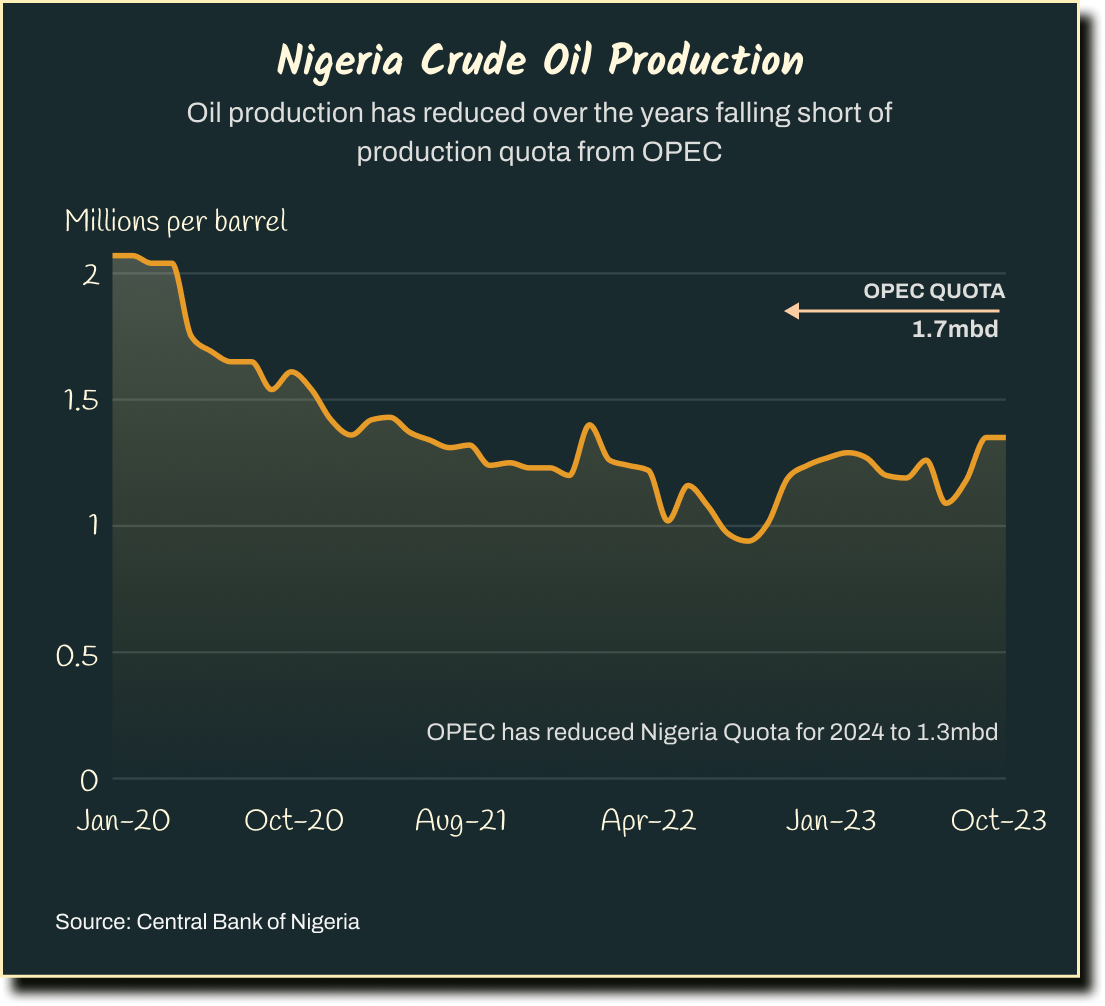
Global events such as the conflict between Russia and Ukraine, it was expected that the demand shortage from Russia would be compensated by other oil-producing countries. However, in recent months, Nigeria's oil production capacity has dwindled, falling short of the 1.74 million barrels per day quota allocated by OPEC and significantly below the 1.69 million barrels per day assumed in the 2023 budget. A major contributing factor is vandalism and theft.
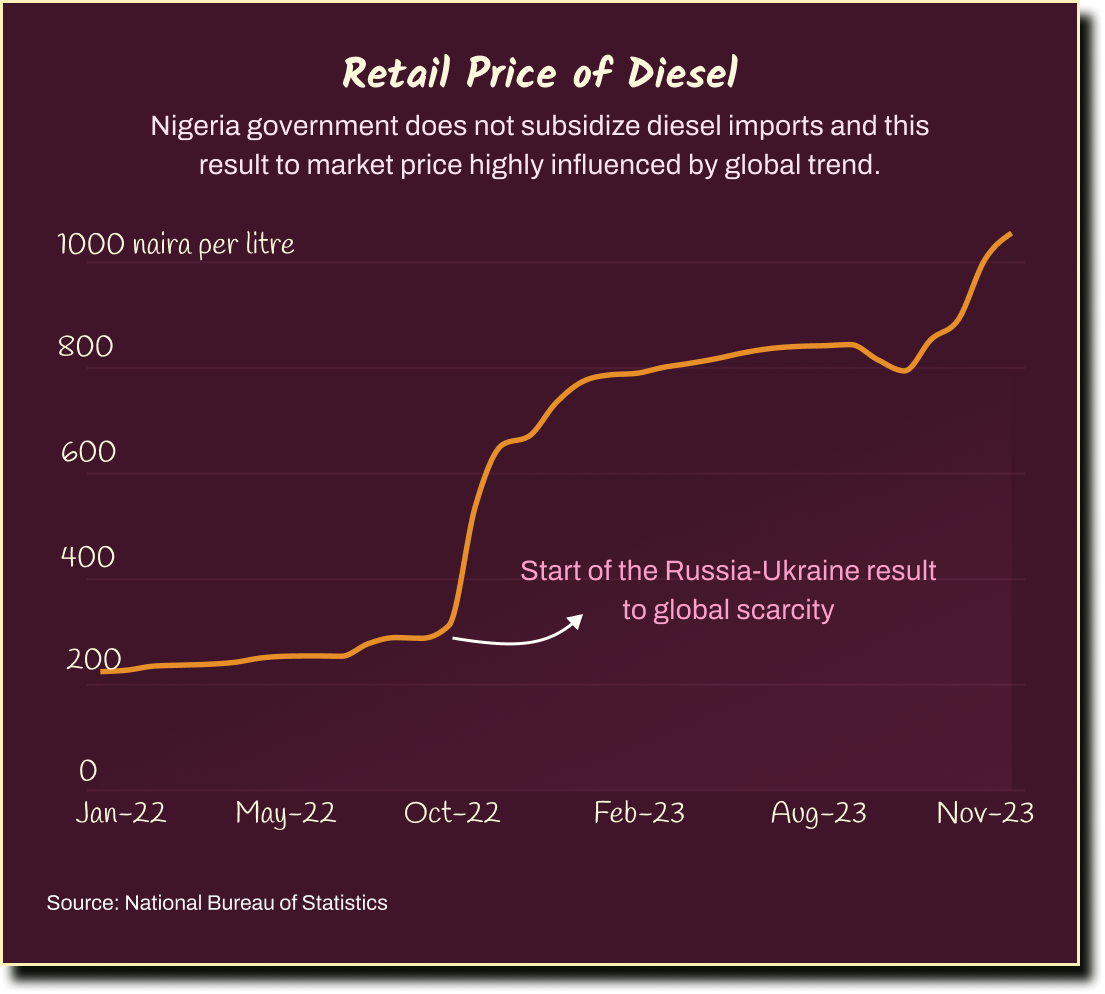
As mentioned earlier, we both produce and import refined products, including PMS, diesel, jet fuel, and even cooking gas, with at least 50 percent of our consumption being imported. Prior to the removal of the fuel subsidy, the government bore the burden of the difference between international prices and the pump price. However, this became unsustainable, leading President Tinubu to declare in his inaugural speech that the government would no longer shoulder this burden. Consequently, prices surged, with PMS averaging ₦200 in November last year and now selling for ₦650, while diesel, previously at ₦810, has risen to ₦1060.
Diesel is not subsidized, unlike petrol. The price of diesel rose from 200 naira in November 2022 and is currently being sold for over 1000 naira.
In August 2023, the Federal Government spent over 160 billion on subsidies. This was aimed at mitigating the impact of the removal, as prices rose from 200 naira to over 750 naira in some parts of the country.
The recurrent scarcity of fuel, coupled with the ultimate removal, has caused the price to surge from 165 naira since the Jonathan administration to over 750 naira in some parts of the country.
Border Closure and Exchange Rate and its negative effect
Some economic policies, aimed at protecting local industries and promoting domestic production, have contributed to the rise in food costs. The prohibition on importing certain items and the border closure to favor homemade agricultural production have resulted in increased prices due to a supply shortage.
In light of the reality of declining forex earnings, the Central Bank of Nigeria (CBN) has faced challenges in maintaining the dollar at a reasonable rate. Previously, we operated under a system with various windows and a fixed peg, but the shift to a market-driven rate, determined by demand and supply, was adopted due to insufficient supply from oil sales, diaspora remittances, and foreign direct portfolio investments. The government found the previous multi-window regime to be costly, prompting the adoption of the new policy.
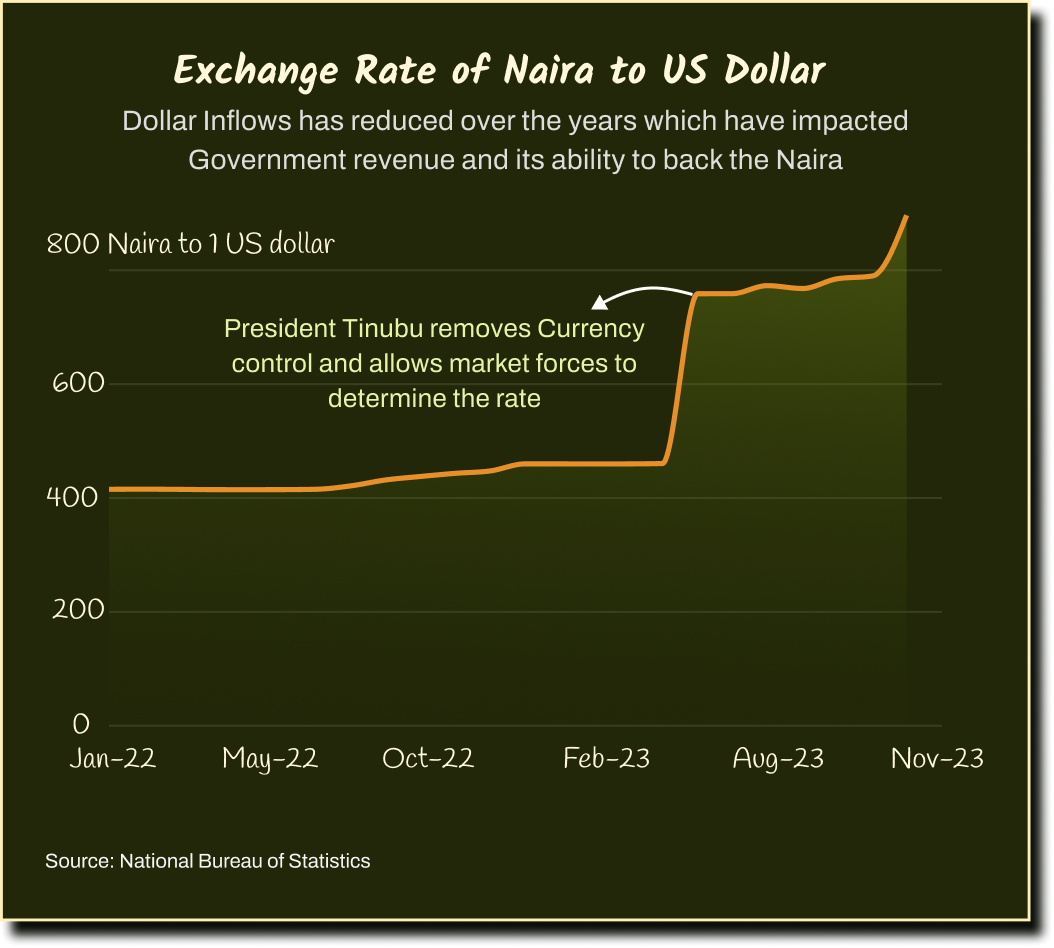
However, the persisting challenge lies in the fact that low forex earnings have not been able to meet the demands for dollars.
Other foods items are expensive too
The same issue elucidated in the feeds and poultry analogy, as explained above, resonates with other food and non-food items. Staple food items, extensively consumed by Nigerians, have witnessed a doubling in prices since 2020. For instance, a bag of rice, which was priced at ₦12,000 in 2016, now commands a staggering ₦55,000.
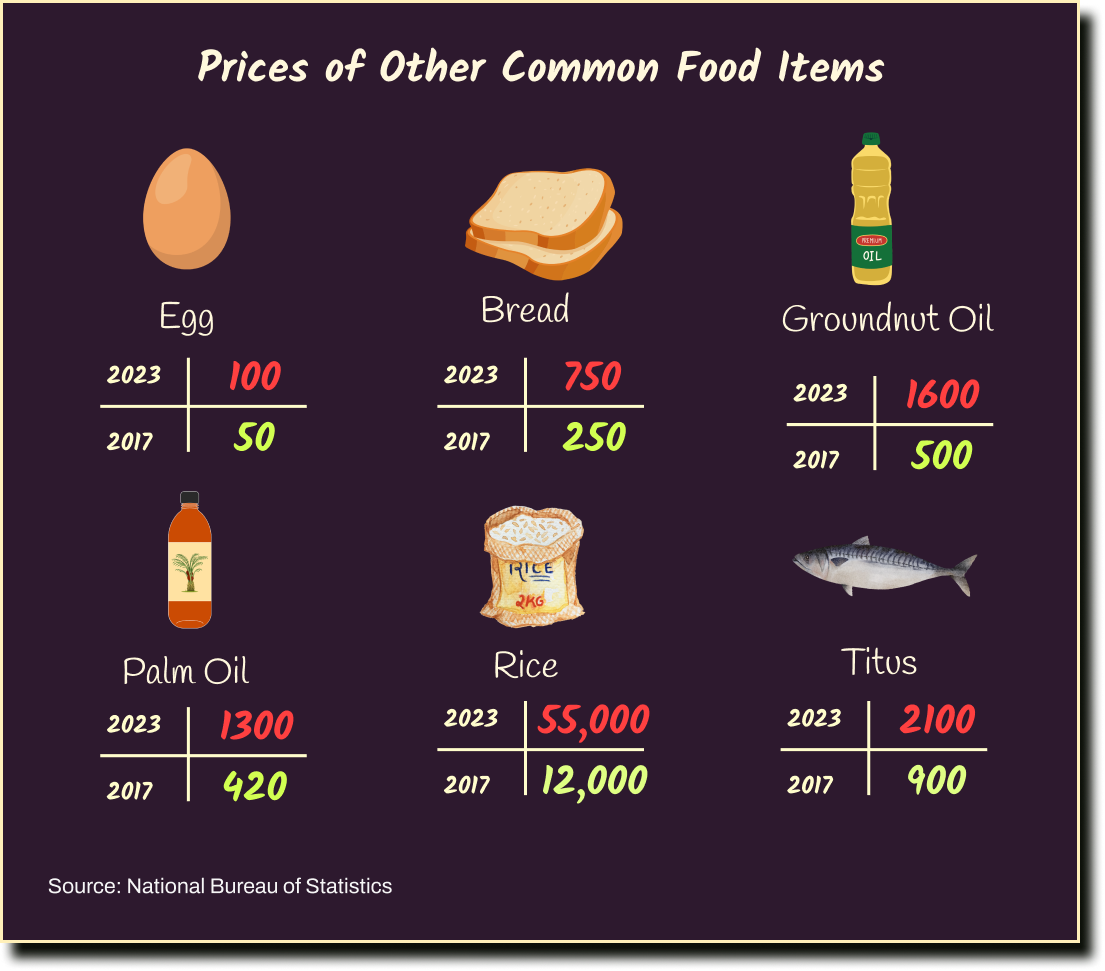
Similarly, alternatives to poultry meat, such as beef and fish, have also seen significant increases. The cost of beef, which was ₦1,000 in January 2021, now averages ₦2,500. Likewise, the price of fish, specifically a titus fish, has surged from ₦1,050 in January 2021 to the current price of ₦2,000.
Basic breakfast essentials like bread and eggs have become cost-prohibitive for many families. A crate of eggs, priced at ₦500 in 2021, has now skyrocketed to ₦2,500. Similarly, a sliced loaf of bread, which was sold for ₦300 in 2017, now commands about ₦1,000.
Palm oil and vegetable oil, crucial items that were initially banned before the removal in October, have also experienced a doubling in price. A liter of vegetable oil, formerly sold for ₦650 in 2021, is now priced at ₦1,500. Likewise, palm oil has seen a significant increase from ₦550 in 2021 to ₦1,350 in October.
How would households cope?
Nigerians collectively spent ₦22 trillion on food expenditures, with 56 percent of the country's total expenditure allocated to food. Breaking down food expenditure on a per capita basis, the average Nigerian spent ₦114,000 in 2019. This translates to an average monthly expenditure of ₦9,500 and ₦300 per day on food. For reference, a loaf of unsliced bread is priced at around ₦1,000.
Consumer responses to price increases typically manifest in two ways: through the income effect, leading to a reduction in consumption, or the substitution effect, where consumers opt for more affordable alternatives.
Income plays a pivotal role in this scenario, especially considering the relatively low earning power of Nigerians. With the minimum wage at ₦30,000, even those earning around ₦100,000 experience limited purchasing power due to inflation. If we consider the earnings of ₦100,000 in 2020, accounting for inflation reduces it to ₦86,000. Comparatively, given the current inflation rate, it is approximately ₦67,000.
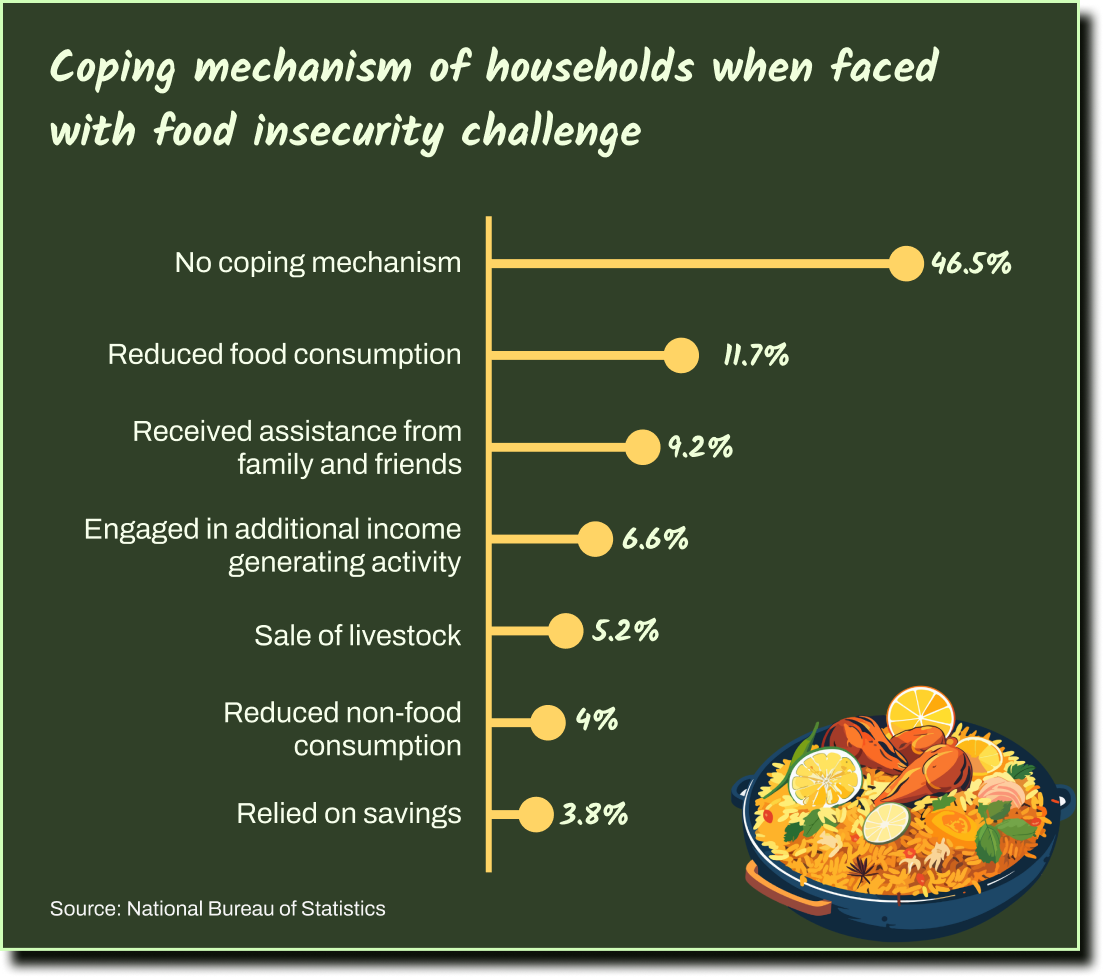
Data from Nigeria living standard survey 2019 reveals that when confronted with food insecurity, a majority of households lack effective coping mechanisms. Savings are the least relied upon, with households either maintaining the status quo and hoping for the best, reducing food consumption, or seeking assistance from friends and family. Nigerians remain optimistic, clinging to hope for a better future—this is our resilience.